
Flying to the FIFA World Cup? Everything You Need to Know Before You Book
The FIFA World Cup is now deep into its knockout rounds, and millions of fans across the United States, Mexico and Canada are racing to lock down last-minute flights, hotels and airport transfers before the quarter-finals kick off. If you are still planning how to reach a host city, book accommodation, or get from the airport to the stadium without stress, this guide walks through everything you need before you book.
The 2026 FIFA World Cup runs from 11 June to 19 July across 16 host cities in the USA, Mexico and Canada, with the quarter-finals played 9–11 July, the semi-finals on 14–15 July, and the final on 19 July at New York New Jersey Stadium. Book flights and hotels as early as possible, confirm your match tickets through official FIFA channels only, and pre-arrange airport transfers to avoid surge pricing and long queues on matchday.
● The tournament features 48 teams and 104 matches across 16 host cities in three countries.
● Quarter-final matches take place 9–11 July, with the final on 19 July.
● Airport transfers should be booked in advance, especially for host cities like Dallas, Atlanta, Miami and Los Angeles where demand spikes sharply around matchdays.
● Flight and hotel prices in host cities rise fastest in the final two weeks of the tournament, so early booking saves money.
● Always verify FIFA World Cup live match ticket and event information through official FIFA sources to avoid resale scams.
What Is the FIFA World Cup Travel Rush?
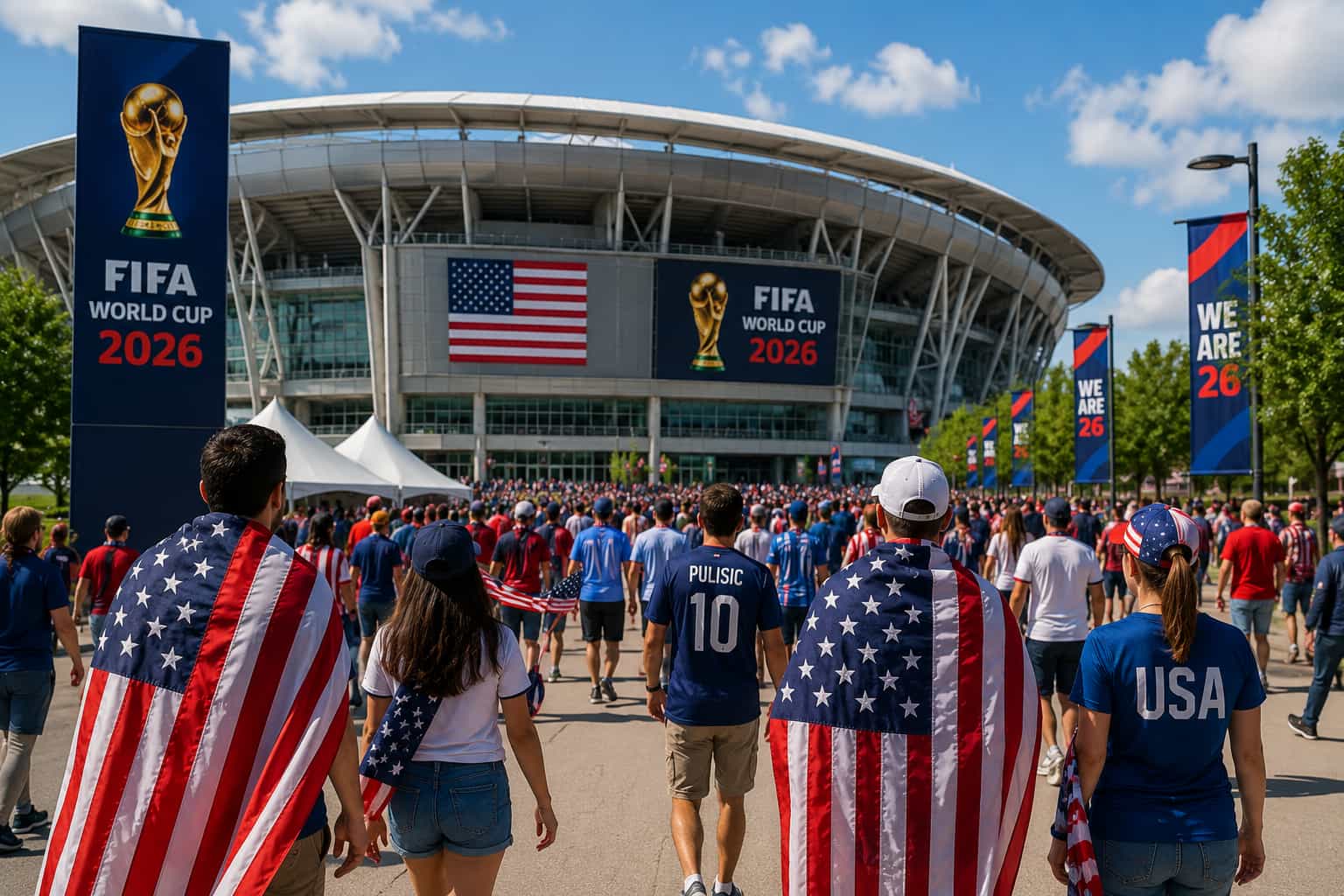
The FIFA World Cup is the largest single-sport event in the world, and the 2026 edition is the biggest yet. With 48 national teams, 104 matches and host cities spread from Vancouver to Miami, this tournament creates one of the most complex travel logistics challenges fans will ever face. Every host city sees hotel occupancy, flight fares and ground transport demand surge in the days around matches, which is why forward planning matters more here than for almost any other sporting event.
Why It Matters
Getting your travel logistics right is not just about convenience; it is about actually making the kick-off. Missed connections, sold-out hotels and last-minute taxi shortages are the most common reasons fans miss matches they have travelled thousands of miles to see.
Booking your flights, accommodation and FIFA World Cup match schedule around airport transfers together, rather than separately, reduces the risk of any single piece falling through.
Benefits of Booking Early and Together
● Locking in flights before the knockout stage draws are confirmed protects you from last-minute fare spikes.
● Pre-booked airport transfers guarantee a driver is waiting even if your flight is delayed.
● Bundling flights, hotels and transfers through one platform reduces the number of separate confirmations you need to track on matchday.
● Early booking gives you more choice of hotels closer to host stadiums, cutting down on matchday travel time.
Step-by-Step Guide to Planning Your Trip
- Confirm your match dates and host city using the official FIFA World Cup fixtures list before booking anything else.
- Book your international or domestic flight into the nearest host city airport, allowing a buffer day before kick-off. Comparing fares early, using tips like those in this guide on finding cheap flights for worldwide travel, can protect your budget as prices climb closer to the knockout rounds.
- Reserve accommodation within a reasonable transfer distance of the stadium, browsing options on the hotels page and checking whether it is walkable or requires transport on matchday.
- Pre-book an airport transfer for both arrival and departure so you are not searching for a taxi during peak demand.
- Check local transport options for matchday itself, including stadium shuttle services and ride-hailing surcharges.
- Keep a printed and digital copy of your match ticket, passport or ID, and hotel confirmation together.
Comparison Table: Travel Options for Host Cities
|
Option |
Best For |
Typical Cost Level |
Booking Lead Time |
|
Pre-booked airport transfer |
Fans wanting fixed pricing and guaranteed pickup |
Medium |
3–7 days ahead |
|
On-arrival taxi rank |
Fans with flexible plans and no time pressure |
Variable, often higher on matchdays |
None |
|
Rideshare apps |
Short notice, single travellers |
Medium to high (surge pricing likely) |
Same day |
|
Public transit or stadium shuttle |
Budget travellers, city-centre hotels |
Low |
None |
Practical Tips for FIFA World Cup Travel
● Build in at least a 2 to 3 hours buffer for airport transfers on matchdays, as roads near stadiums close early.
● Check whether your host city requires event-specific transport passes on top of standard match tickets.
● Keep local currency on hand for smaller vendors even in cities that are largely card-friendly.
● Save your hotel's address in the local language or with clear cross streets for drivers unfamiliar with tourist landmarks.
Expert Advice
Seasoned major-event travellers recommend treating airport transfers as part of your ticket strategy, not an afterthought. A confirmed pickup at both ends of your journey removes one of the biggest sources of matchday stress, particularly in cities like Los Angeles, Dallas and Atlanta, where distances between the airport, hotel and stadium can be considerable. It is also worth building a short contingency window into your schedule in case matches go to extra time or penalties, which can delay stadium departures by 30–45 minutes.
Common Mistakes to Avoid
● Waiting until match day to book ground transport, when prices and availability are at their worst.
● Assuming every host city has the same public transport standard, some cities require far more advance planning than others.
● Booking hotels without checking matchday road closures near the stadium.
● Relying solely on unofficial resale sites for World Cup stats, schedules or ticket information.
● Not weighing up the difference between arranging transport in advance and sorting it out on the day: Our comparison of pre-booking versus on-arrival airport transfers breaks down when each approach makes sense.
Safety Advice
Only use licensed, pre-booked transport providers, particularly late at night after evening kick-offs. Keep your match ticket, ID and payment cards separate rather than in one bag. Register with your country's travel advisory service if travelling internationally, and check host city advisories for large-crowd events before you go.
Cost Considerations
Flights and hotels in host cities typically rise sharply in the two weeks before a match, and even more so around the semi-finals and final. Airport transfers booked in advance are usually cheaper and more predictable than on-arrival taxis or surge-priced rideshares on matchday. Building a realistic budget that includes transfers, local transport and a buffer for delayed matches helps avoid unexpected costs.
Local Insights
Host cities such as Dallas, Atlanta, Miami, Los Angeles, New York/New Jersey, Seattle, Houston, Kansas City, Boston, Philadelphia, San Francisco Bay Area, Toronto, Vancouver, Mexico City, Guadalajara and Monterrey each have different distances between their main airport and stadium, ranging from a short hop to well over an hour depending on traffic. Checking this distance in advance helps you judge how early to leave for kick-off. Fans planning to follow the tournament across more than one host city, or extend their trip to nearby attractions, may also want to look at events and attractions and car rental deals worldwide for the days between matches.

Staying on Top of Scores While You Travel
Between flights, hotel check-ins and airport transfers, it is easy to lose track of what is happening elsewhere in the tournament. Many travelling fans keep an eye on the World Cup standings and the FIFA World Cup points table 2026 on the official FIFA app so they know exactly which teams are through before booking onward travel to a semi-final host city. If you are moving between host cities to catch multiple World Cup games, checking live FIFA World Cup 2026 score updates during your transfer can also help you decide whether to detour for a big-screen viewing spot if your own match has already finished. Fans following football FIFA World Cup coverage from outside North America should note that kick-off times shift considerably by region, so cross-checking the schedule against your own time zone before booking a transfer avoids arriving hours early or missing the opening whistle. Wherever your interest in the FIFA World Cup football action takes you next, building a short buffer around travel and match times keeps the trip enjoyable rather than rushed.
Business Traveller Tips
If you are combining match attendance with work commitments, prioritise hotels near business districts with strong transit links to the stadium, and pre-book transfers around your meeting schedule rather than leaving gaps for last-minute arrangements. A fixed-price FIFA World Cup live day transfer is easier to expense and plan around than an on-demand ride.
Family Travel Tips
Families attending matches together should build extra time into every transfer, since moving through crowds with children takes longer than travelling solo. Choosing a private transfer over public transit on matchday can reduce stress considerably, particularly for evening fixtures with younger children.
Accessibility Advice
Fans with mobility needs should confirm accessible vehicle availability when booking airport transfers well ahead of travel dates, since accessible vehicle supply is more limited than standard cars, especially around quarter-final and semi-final weekends. Most host stadiums also offer accessible drop-off points that differ from the general fan entrance, so checking this in advance saves time on matchday.
Conclusion
The FIFA World Cup only comes around every four years, and the logistics around it, from flights and hotels to airport transfers, are far more complex when 16 host cities and three countries are involved. Fans who confirm their FIFA World Cup fixtures, book flights early, and arrange airport transfers in advance consistently have a smoother, less stressful matchday experience than those who leave transport to chance. Whether you are chasing the quarter-finals, semi-finals or the final itself on 19 July, treating your travel plan as a single connected journey, rather than separate bookings, is the single biggest thing you can do to protect your trip.
Ready to lock in your FIFA World Cup trip? Moveezo helps fans book flights, hotels, and pre-arranged airport transfers together across every host city in the USA, Mexico and Canada, so you can focus on the match instead of the logistics. Start planning your journey on the Moveezo homepage, search live fares on the flights page, or reach the team directly through contact us for tailored matchday travel support.
Frequently Asked Questions
Q1: When does the FIFA World Cup 2026 quarter-final stage begin?
The quarter-finals run from 9 to 11 July 2026, following the round of 16, which concluded on 7 July. The semi-finals follow on 14 and 15 July, with the final on 19 July at New York New Jersey Stadium.
Q2: How far in advance should I book an airport transfer for a FIFA World Cup match?
Book at least three to seven days ahead where possible, and earlier for quarter-final, semi-final or final weekends when demand and traffic around stadiums peak sharply.
Q3: Which host cities are hardest to travel around on matchday?
Cities with longer airport-to-stadium distances, such as Dallas, Kansas City and the San Francisco Bay Area, generally need more buffer time than compact host cities with stadiums closer to the airport or downtown core.
Q4: Is it cheaper to book a taxi on arrival than to pre-book a transfer?
Not usually around matchdays. On-arrival taxis and rideshares often carry surge pricing near host stadiums, while a pre-booked transfer locks in a fixed price in advance.
Q5: Where can I check official FIFA World Cup fixtures and results?
Always check schedules, FIFA World Cup results and FIFA World Cup bracket updates through FIFA's official tournament channels rather than unofficial resale or fan sites, to avoid outdated or inaccurate information.
Q6: Do host stadiums offer accessible transport options?
Most host stadiums provide accessible drop-off points separate from general fan entrances, but accessible vehicle availability for transfers is limited, so this should be booked well in advance.
Q7: What should families prioritise when planning World Cup travel?
Families should allow extra transfer time around crowds, consider private transport over public transit for evening matches, and confirm hotel proximity to the stadium before booking.
Q8: Can I combine flights, hotels and transfers in a single booking for the FIFA World Cup?
Yes. Booking flights, accommodation and airport transfers together through one platform, such as Moveezo, reduces the number of separate confirmations to manage and lowers the risk of a gap in your travel plan.