
School Transport vs School Bus vs Taxi Which Option Is Best
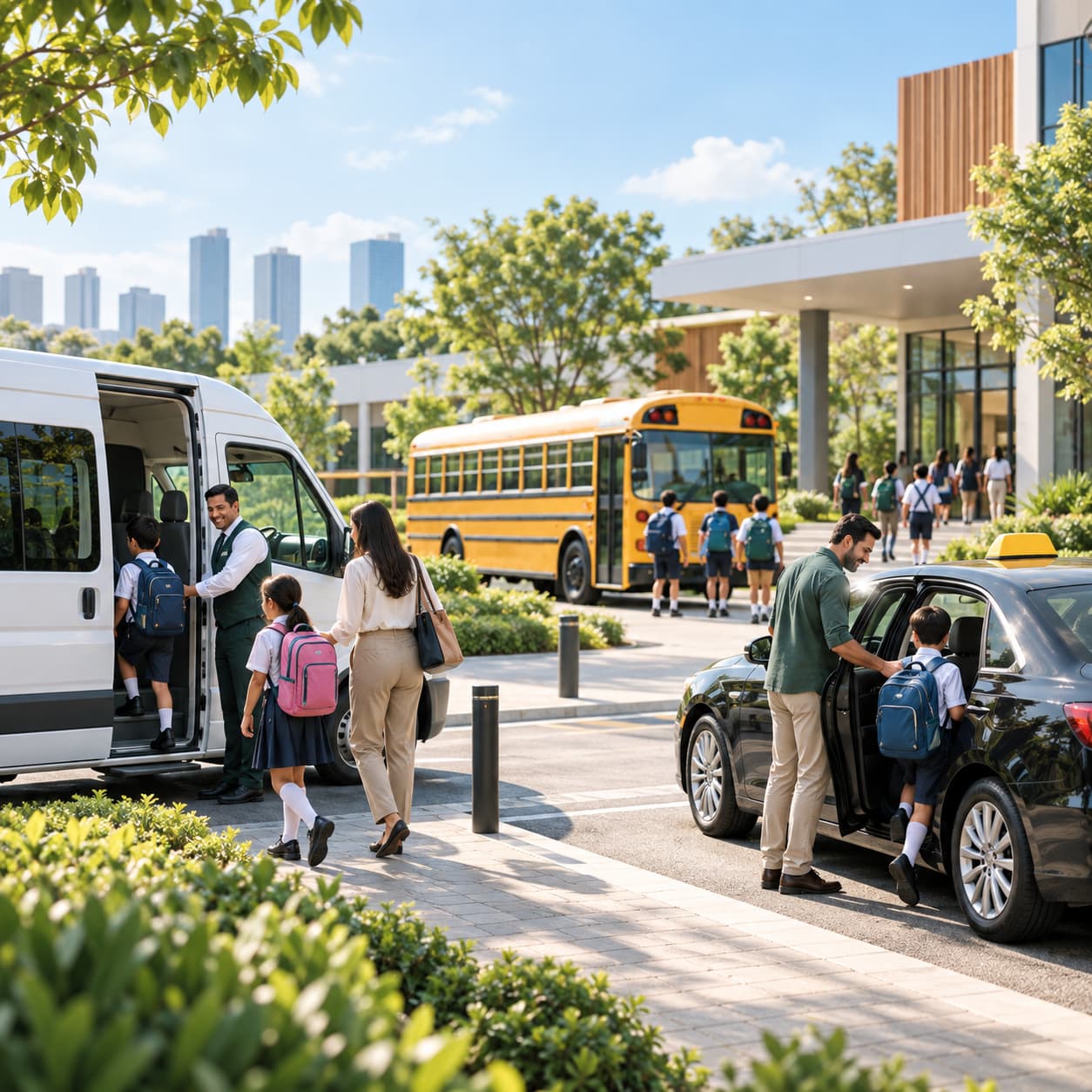
Getting the school run right matters more than most families realise, because school transport in the UK isn't one single thing, it's a mix of council-arranged travel, school-run buses, and taxis, each with different rules, costs and eligibility criteria. Picking the wrong one can mean paying for something your child is legally entitled to get free, or missing an application deadline that pushes your family back onto term-time driving.
This guide compares all three options against the UK's actual statutory rules, so you can work out which one fits your child's school, distance and needs, rather than guessing.
Local authority school transport is free for eligible children based on distance, age and household income, and is arranged directly by the council. A school bus (often a contracted minibus or coach) is typically the vehicle used to deliver that council-arranged transport, or is booked privately by a school or group of parents. A taxi, meanwhile, is generally used for individual journeys, SEND transport, or families outside statutory eligibility who choose to book their own daily school transport for children. Eligibility for free transport depends mainly on distance from the nearest suitable school: two miles for children under 8, and three miles for children aged 8 and over, with extended distance rules for children from lower-income households.
What Counts As School Transport In The UK
“School transport” is the broad term for any arrangement that gets a child to and from school, whether that's a council minibus, a scheduled public bus, a shared taxi, or a parent's own car. Local authorities in England have statutory duties under the Education Act 1996 to provide free school transport for children who meet distance, age or low-income criteria, set out in the Department for Education's home to school travel and transport guidance.
This is different from a school simply running its own minibus service, or a family privately booking a taxi — both of which fall outside the statutory free transport scheme, even though people often use the terms interchangeably.
Who Is Entitled To Free School Transport
Free transport eligibility is based on the distance to your child's nearest suitable school, their age, and in some cases household income. The current statutory thresholds are:
-
Under 8 years old: free transport if the nearest suitable school is more than 2 miles from home
-
Aged 8 to 16: free transport if the nearest suitable school is more than 3 miles from home
-
Extended rights (low income families): free transport for children aged 8–11 if their nearest suitable school is more than 2 miles away, and for children aged 11–16 if a qualifying school is between 2 and 6 miles away
-
Faith or belief-based extended rights: free transport for low income families choosing a school on religious or belief grounds between 2 and 15 miles from home, where no suitable nearer school exists
Local authorities must also arrange transport for children who cannot reasonably be expected to walk the statutory distance due to their special educational needs, disability or mobility problem, regardless of the exact mileage involved.
School Transport Vs School Bus Vs Taxi
Each option suits a different situation. Here's how they compare on cost, flexibility and who typically uses each one.
|
Option |
How It Works |
Best For |
|
Local authority school transport |
Council arranges and funds transport for eligible children, often via a contracted minibus or coach |
Families meeting statutory distance or low-income eligibility criteria |
|
School bus / minibus |
Scheduled route run by the school, a private operator, or a council contractor, usually shared between many pupils |
Families near a fixed route wanting a lower-cost, no-car-needed option |
|
School taxi service |
Individual or small-group private hire journeys, often used for SEND transport or families outside free eligibility |
SEND transport, irregular hours, remote addresses, or no suitable bus route |
Pros And Cons At A Glance
-
Local authority transport: free where eligible, but routes and pick-up times are fixed by the council and appeals can take time if you're refused
-
School bus: usually the cheapest per-child option and reduces daily car journeys, but timings are fixed and it may involve a longer combined journey with multiple stops
-
School taxi: the most flexible on timing and door-to-door convenience, particularly valuable for SEND transport, but it's typically the most expensive option if you're paying privately
SEND Transport And Accessibility
Special educational needs and disabilities (SEND) transport is a distinct category within school transport, and it costs councils significantly more per pupil than mainstream provision because journeys are often longer and less shareable, and may need specially adapted vehicles or a trained passenger assistant on board. If your child needs a wheelchair accessible taxi as part of their journey, whether through a council contract or privately, our wheelchair accessible taxi guide for the UK explains what to expect from a properly equipped vehicle and driver.
Local authorities have discretion over exactly what support they provide for SEND pupils outside the statutory minimum, so it's worth asking your council's transport team directly what's available before assuming you'll need to arrange and pay for it yourself.
Safeguarding And Driver Checks
Whichever option you use, safeguarding standards differ depending on how the journey is arranged. Taxi and private hire drivers on a school taxi service contract — defined as driving mainly or wholly for children, on more than three days in any 30-day period, under an arrangement with a school or local authority — fall under what's known as regulated activity, and require an enhanced DBS check including a children's barred list check. This check must be arranged by the school or local authority responsible for the contract, not the driver alone.
If a parent privately books an ordinary taxi journey to school on an occasional basis, that single trip doesn't count as regulated activity in the same way, though the driver will still hold the enhanced DBS check required for any taxi or private hire licence. Bus and minibus drivers on a school contract require the same enhanced DBS check as a condition of the contract, regardless of whether they're privately employed or council-contracted.
Costs To Expect
Free statutory transport removes the direct cost for eligible families, but many households fall just outside the thresholds and need to budget for one of the paid alternatives.
-
Local authority transport: free for eligible pupils; some councils charge a subsidised rate for pupils who don't meet the criteria but live on an existing route
-
School bus or minibus: usually charged as a termly or annual season pass, cheaper per journey than an individual taxi
-
School taxi: priced per journey or as a fixed weekly rate if booked regularly; shared school taxis split between two or three children reduce the per-family cost
If you're comparing taxi pricing for a regular school run, our UK taxi fare calculator is a useful starting point for understanding how fares are typically structured, and our guide to finding a cheap taxi near you covers practical ways to bring costs down without cutting corners on safety.
How To Apply For Free School Transport
-
Check your council's home to school transport policy on their website, as the process and deadlines vary by local authority
-
Confirm the distance from your home to the nearest suitable school, since eligibility is measured by the shortest safe walking route, not the school you'd prefer
-
Apply before the council's deadline, usually in spring for the following September, as late applications can delay a start date
-
Provide evidence of low income status (such as free school meal eligibility) if applying under the extended rights criteria
-
If refused, use the council's appeals process; an independent panel reviews the distance measurement, route safety and your child's individual circumstances
Common Mistakes Parents Make
-
Assuming free transport applies automatically without an application — most councils require parents to apply each year
-
Missing the application deadline and having to arrange private transport as a stop-gap while the council processes a late request
-
Not appealing a refusal, even though independent panels do overturn decisions where distance or safety factors were miscalculated
-
Booking an unlicensed or informal driver for a paid school run instead of a licensed taxi or private hire vehicle with the correct DBS checks
-
Overlooking discretionary SEND support because it wasn't offered automatically — councils have discretion but won't always volunteer every option
Practical Tips For Choosing
-
Start with your council's eligibility checker before comparing paid options, since free transport isn't always well publicised
-
For SEND transport, ask specifically about passenger assistants and vehicle adaptations rather than just seat availability
-
If sharing a private school taxi with neighbouring families, agree a clear backup plan for sickness, holidays or late notice changes
-
For irregular schedules, such as wrap-around childcare or after-school clubs on different days, a flexible taxi arrangement is often more practical than a fixed bus route
-
Review transport arrangements each September, since distances, siblings' schools and eligibility thresholds can change year to year
Seasonal And Family Considerations
Winter weather and school holiday periods both affect school transport reliability. Councils and bus operators can suspend or delay routes in poor weather, so it's worth having a fallback plan, particularly if your child's journey includes a rural or unlit route. Outside term time, families often need one-off transport for school holiday clubs, open days or trips, which is where a flexible, pre-booked taxi tends to work better than a fixed school bus route.
If you're planning family travel around the school calendar more broadly, our guide to planning UK school holiday destinations and guide to minibus transfers without hidden charges cover practical ways to keep group and family journeys straightforward once term ends.
Conclusion
Choosing between local authority school transport, a school bus and a private taxi comes down to your child's distance from school, their individual needs, and whether you meet the statutory eligibility criteria. Start by checking your council's free transport rules, apply well before their deadline, and use a licensed, DBS-checked taxi or private hire service to fill any gaps, particularly for SEND transport or irregular schedules that a fixed bus route can't cover.
Frequently Asked Questions
What is school transport in the UK?
School transport refers to any arrangement that gets a child to and from school, including council-arranged free transport, school buses or minibuses, and taxis. Local authorities have a statutory duty to provide free transport for children who meet distance, age or low-income criteria.
How far do I have to live from school to get free transport?
Children under 8 qualify if their nearest suitable school is more than 2 miles away, and children aged 8 to 16 qualify if it's more than 3 miles away. Extended distance rules apply for children from low income families.
Do taxi drivers need a DBS check for school transport?
Yes. Drivers on a contract to transport children on more than three days in a 30-day period fall under regulated activity and require an enhanced DBS check with a children's barred list check, arranged by the school or local authority.
Is school transport free for SEND children?
Local authorities must arrange transport for children who cannot reasonably walk to school due to SEND or disability, regardless of distance. The exact level of support beyond this statutory minimum is at the council's discretion.
What's the difference between a school bus and school transport?
School transport is the overall system, including free council-arranged travel. A school bus or minibus is typically the vehicle used to deliver that transport, or a separate service booked privately by a school or group of parents.
Can I appeal if my child is refused free school transport?
Yes. Every local authority must offer an appeals process, where an independent panel reviews the distance measurement, route safety and your child's circumstances before making a final decision.
Is a private school taxi safer than a shared school bus?
Both must meet safeguarding requirements if contracted to carry children regularly, including enhanced DBS checks for drivers. The right choice usually depends on your child's specific needs rather than one option being inherently safer.