
A Complete Guide to Airport Transfer Driver Jobs in the UK
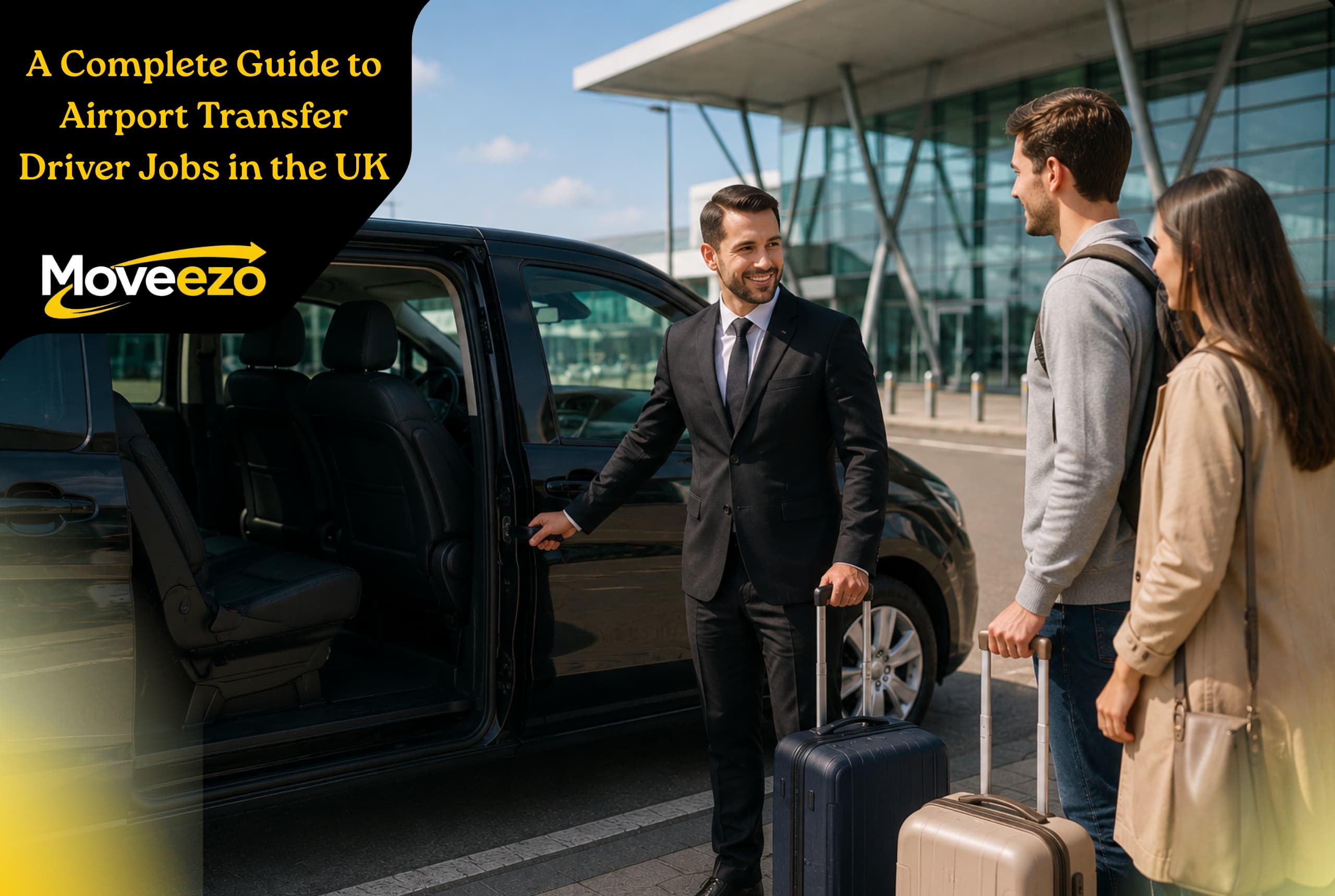
Thinking about driving passengers to and from the airport for a living? You are looking at one of the most flexible, steady sources of work in the UK private hire trade. Airports never close, flights run around the clock, and travellers always need a reliable ride.
This guide walks you through exactly what airport transfer driver jobs involve, what licences and documents you need, how much you can earn, and the precise steps to get started. Whether you want a full-time career or a few well-paid shifts each week, you will finish this article knowing your next move.
What Airport Transfer Driver Jobs Actually Involve
Let's start with the basics. An airport transfer driver collects passengers from their home, hotel or office and drives them to the airport, or meets arriving passengers and takes them to their destination.
The work is different from general minicab driving in a few key ways:
- Pre-booked journeys — most airport transfers are booked in advance, so you know your pickups ahead of time.
- Meet and greet — for arrivals, you often wait in the terminal with a name board and help with luggage.
- Longer, higher-value fares — airport runs cover more distance than a short town trip, which means a bigger fare.
- Fixed pricing — passengers usually pay an agreed price, so there are no meter disputes.
You will spend time at major hubs such as Heathrow, Gatwick, Stansted and Manchester. Each airport has its own designated pickup zones, drop-off rules and parking charges, so local knowledge pays off quickly.
If you enjoy driving, meeting people and managing your own diary, this line of work suits you well.
The Difference Between Common Driver Roles
Before you apply, it helps to know how the main job titles fit together. People often use them interchangeably, which causes confusion.
- PCO Driver Jobs — "PCO" stands for Public Carriage Office, the old name for the body that licensed private hire in London. A PCO driver holds a Transport for London (TfL) private hire licence and can carry passengers for hire and reward.
- Private Hire Driver Jobs — this is the official term for any licensed minicab driver in England and Wales who takes pre-booked journeys through a licensed operator.
- Airport Driver Jobs — a specialism within private hire, focused on airport runs rather than local trips.
- Chauffeur Driver Jobs — a premium version of the role, usually in an executive saloon or people carrier, offering a higher level of service and comfort.
Here is a simple decision rule. If you want to work in London, you need a TfL private hire licence. If you want to work outside London, you apply to your local council instead. When in doubt, apply to the licensing authority for the area where you plan to work most.
Licensing Requirements You Must Meet
Now for the part that matters most. You cannot legally drive passengers for pay without the correct licence, so get this right before anything else.
To hold a private hire vehicle (PHV) driver licence in England and Wales, you must:
- Be at least 21 years old at the time of applying.
- Have held a full DVLA (Driver and Vehicle Licensing Agency) driving licence, or an equivalent EU licence, for at least 12 months. In London, TfL requires three years.
- Have the right to live and work in the UK.
- Pass a "fit and proper person" check, which reviews your background and character.
- Meet the medical standard set by the DVLA for professional drivers.
The government sets out the national rules on the official taxi and private hire driver licence page, which explains eligibility, how to apply and what happens after you apply.
If you plan to work in the capital, TfL runs its own detailed process. You can read the full requirements on the TfL private hire driver licence page, including assessments, medical rules and DBS checks.
Three things worth knowing before you start Airport Transfer Driver Recruitment:
- You must also work for a licensed private hire operator. A private hire operator is the company that takes bookings and assigns them to drivers.
- The driver, the vehicle and the operator must all be licensed by the same authority.
- Your licence is usually valid for three years, then you renew it.
The Documents You Need to Get Licensed
Gathering paperwork early saves weeks of delay. Here is your checklist.
- Enhanced DBS check — the Disclosure and Barring Service checks your criminal record. Airport transfer drivers need the enhanced level, which is the most thorough. You must also subscribe to the DBS Update Service to keep it current.
- Medical examination — you need a check against the DVLA Group 2 standard, the higher medical bar used for professional drivers. Your GP or an approved doctor completes the form.
- Right to work evidence — a passport, or a share code if you are an EU or EEA national.
- PCO licence or PHV licence — your private hire driver licence from TfL or your local council.
- Topographical or English language assessment — London applicants sit assessments covering route knowledge, safety and English reading and speaking.
- HMRC tax check code — renewing drivers must confirm they are registered to pay tax on their earnings.
Keep digital copies of everything in one folder on your phone. Operators and airports often ask to see documents at short notice.
How Much Can You Earn
Money is the question everyone asks, so let's be specific.
Earnings vary by hours, airport, vehicle and how you find work. As a rough guide:
- Employed or account drivers often earn between £28,000 and £40,000 a year working full-time hours.
- Self-employed drivers keep more per fare but cover their own costs. Take-home pay commonly lands between £30,000 and £50,000 depending on volume.
- Chauffeur and executive drivers can earn more, sometimes £45,000 and above, thanks to premium rates and corporate accounts.
A single Heathrow-to-central-London transfer can pay far more than several short town trips, which is why many drivers favour airport work.
Bear in mind the costs that come out of your income:
- Hire and reward insurance, which is more expensive than standard cover.
- Fuel or electricity, and vehicle maintenance.
- Licensing, DBS and medical fees, roughly £500 to £600 to get started.
- The Congestion Charge and Ultra Low Emission Zone (ULEZ) if your vehicle is not compliant.
To protect your margins, choose a fuel-efficient or electric vehicle that meets ULEZ standards. That single decision can save you thousands each year.
Pros and Cons of the Role
Every job has trade-offs. Weigh these before you commit.
Pros
- Flexible hours that fit around family or a second job.
- Steady demand because airports operate every day of the year.
- Higher-value fares than short local runs.
- Pre-booked work, so you can plan your day.
- A clear path to premium chauffeur roles over time.
Cons
- Early starts and late finishes to match flight times.
- Upfront costs for licensing, insurance and a suitable vehicle.
- Traffic and flight delays can stretch your day.
- Airport parking and drop-off charges eat into fares if you don't plan.
- Income depends on how many hours you put in when self-employed.
If the flexibility appeals more than the early starts worry you, this role is a strong fit.
Step by Step Guide to Getting Started
Ready to act? Follow these steps in order and you will avoid the common delays.
- Confirm your eligibility. Check your age, how long you have held your DVLA licence, and your right to work.
- Choose your licensing authority. Apply to TfL for London or to your local council for anywhere else.
- Register for your DBS check through your authority's approved provider and join the DBS Update Service.
- Book your medical against the DVLA Group 2 standard with your GP or an approved doctor.
- Sit any required assessments — in London this means the English language and Safety, Equality and Regulatory Understanding tests, plus a topographical skills test.
- Complete your HMRC tax check if you are renewing or already hold a licence.
- Submit your application and pay the fees. Keep your reference number handy.
- Get a compliant vehicle and hire and reward insurance. Confirm it meets ULEZ rules.
- Register with a licensed private hire operator so you can legally take bookings.
- Start driving once your licence is granted and your operator has assigned your first jobs.
The full process from application to first fare typically takes a few months, mostly due to background checks outside your control. Start early and chase each step.
Practical Tips to Succeed Faster
A few habits separate the drivers who thrive from those who struggle.
- Learn the airport layouts. Know the designated pickup zones, short-stay car parks and drop-off charges at Heathrow, Gatwick, Stansted and Manchester.
- Track flight numbers. Free flight-tracking apps tell you when a plane lands so you time arrivals perfectly.
- Keep your car spotless. Airport passengers expect a clean, comfortable vehicle, especially for chauffeur work.
- Confirm bookings the night before. A quick message reduces no-shows.
- Build repeat customers. Reliable service turns one transfer into a regular account.
- Understand accessibility. Some passengers need step-free travel, so read our wheelchair accessible taxi guide for the UK to serve every customer well.
Small, consistent improvements compound into higher earnings and better reviews.
Career Progression and Where the Work Comes From
Airport driving is a starting point, not a ceiling.
Many drivers begin with standard private hire work, then move into executive and Chauffeur Driver Jobs as they build reputation and repeat clients. Others specialise in a single airport and dominate that patch through local knowledge.
Work reaches you through three main channels:
- Private hire operators who assign pre-booked jobs.
- Booking platforms and apps that match drivers with passengers.
- Direct corporate accounts for businesses that need regular airport runs.
Platforms like Moveezo connect travellers with reliable drivers across more than 140 countries, covering airport transfers, city-to-city journeys and executive travel. Building a presence where passengers already book is the fastest way to keep your diary full.
How Moveezo Fits Into Your Plans
Here is where a strong booking partner makes a difference.
Moveezo arranges airport transfers, flights, hotels and car rentals for travellers heading to and from major UK hubs. That means steady, pre-booked demand for professional drivers who value reliability.
Passengers rely on us for smooth journeys to and from:
Want to understand how travellers choose their rides? Our comparison of pre-booking versus on-arrival airport transfers shows why pre-booked work is so valuable to drivers.
To learn more about who we are, visit our Website. Ready to talk? Reach our team on +44 20 3504 6075 or email info@moveezo.com, or head straight to our contact page.
Frequently Asked Questions
Do I need a PCO licence for airport transfer driver jobs in London?
Yes. To work in London you need a TfL private hire driver licence, often called a PCO licence. You must be 21 or over, have held your DVLA licence for three years, pass a DBS and medical check, and complete the required assessments before you can drive.
How long does it take to become an airport transfer driver?
Most applicants take a few months from start to finish. The delay comes mainly from background checks, medicals and assessments, which sit outside your control. Start your DBS and medical early, and gather your documents in one place to avoid extra waiting.
How much do airport transfer drivers earn in the UK?
Full-time drivers commonly earn between £30,000 and £50,000 a year, and executive chauffeurs can earn more. Your take-home pay depends on hours worked, your airport, vehicle costs and whether you drive employed or self-employed. Airport fares pay more than short local trips.
What is the difference between PCO Driver Recruitment and private hire recruitment?
PCO Driver Recruitment refers specifically to hiring licensed private hire drivers in London under TfL rules. Private hire recruitment is the broader national term used across England and Wales, where local councils issue licences instead of TfL. The driving work itself is very similar.
Do I need a special vehicle to Become an Airport Transfer Driver?
Your vehicle must be licensed as a private hire vehicle, carry hire and reward insurance, and meet ULEZ emission standards if you drive in affected zones. Many drivers choose fuel-efficient or electric cars to cut running costs and comply with clean air rules.
Can I do airport transfer driving jobs part-time?
Yes. Airport Transfer Driving Jobs suit part-time drivers well because most work is pre-booked. You can accept only the shifts that fit your schedule, whether that means early morning arrivals or a few evening departures each week.
What documents do I need to apply for airport driver jobs?
You need an enhanced DBS check, a DVLA Group 2 medical, proof of your right to work, your private hire driver licence, and any required assessment passes. Renewing drivers also need an HMRC tax check code. Keep digital copies ready for operators and airports.
Do airport transfer drivers have to help with luggage and wheelchairs?
Helping with luggage is expected and often what earns repeat bookings. For wheelchair users, licensed drivers of designated accessible vehicles must provide reasonable assistance at no extra charge, unless they hold a medical exemption from their licensing authority.